
KitchenAid Dishwasher Not Cleaning: Causes and Safe Fixes
Quick answer
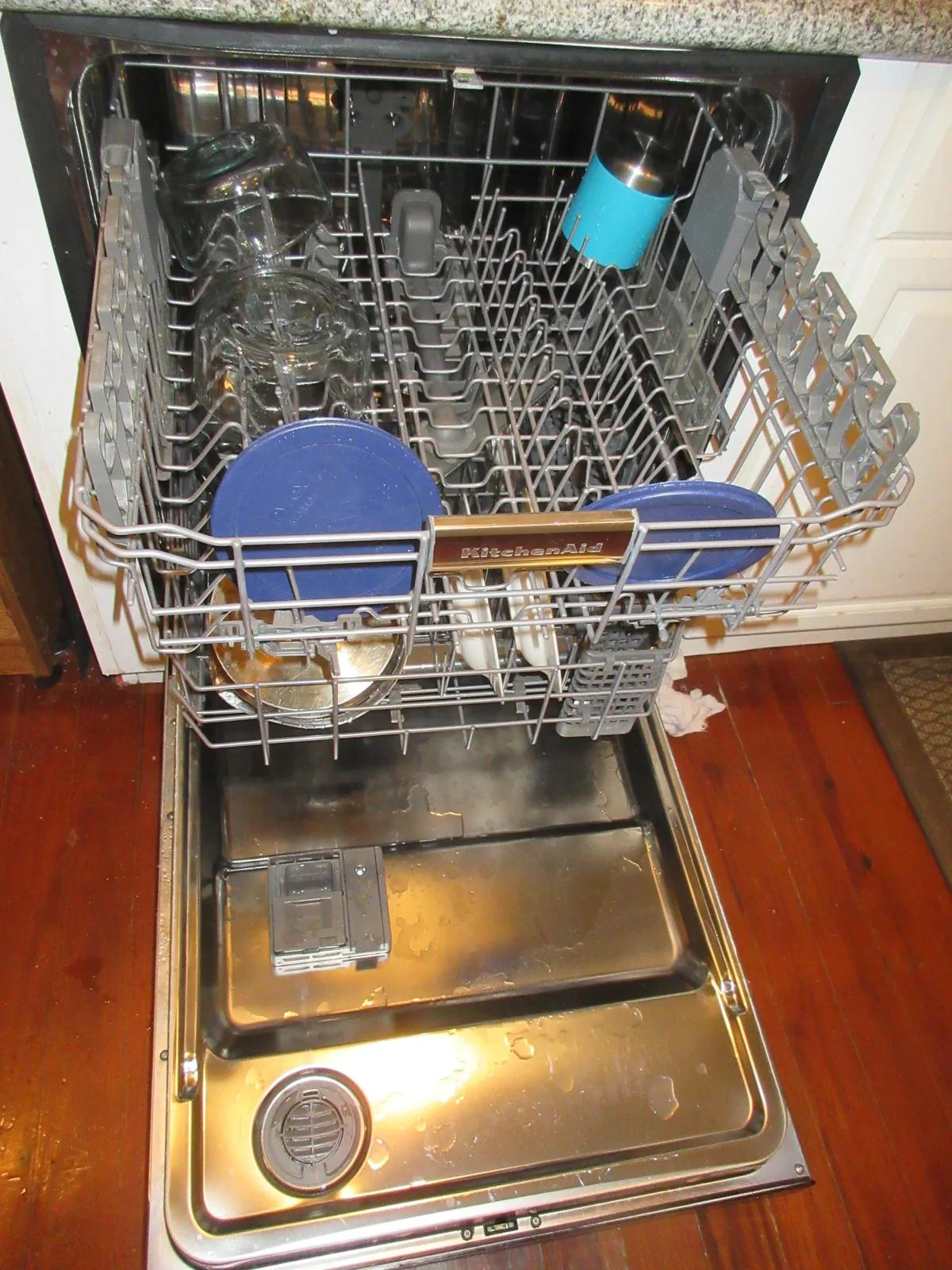
When a KitchenAid dishwasher leaves dishes dirty, the cause is usually something you can check yourself. KitchenAid’s support pages point to a dirty filter, a blocked spray arm, water that is not hot enough (KitchenAid recommends 120°F incoming water), the wrong or old detergent, no rinse aid, overloading, or hard water buildup. Clean the filter, run the hot water at the sink before starting, load so the spray arms can turn, and use fresh automatic dishwasher detergent with rinse aid. If dishes are still dirty after all of that, a part such as the heater, a sensor, or a spray arm may need attention.
Quick diagnosis table
| Symptom | Possible cause | First check |
|---|---|---|
| Dishes come out dirty or gritty | Dirty filter | Clean the filter |
| Dishes not cleaned, spray arm does not spin | Spray arm blocked or dishwasher overloaded | Make sure the spray arms can turn |
| Bottom rack dirty, top rack clean | “Top Rack Only” cycle selected | Check whether that cycle was selected |
| White film or spots on dishes | Hard water buildup | Add rinse aid and clean the dishwasher |
| Poor cleaning, water not hot enough | Incoming water below 120°F | Run the kitchen faucet until the water is hot |
| Cool dishes, very long cycles, still dirty | Possible failed heater or temperature sensor | Get a professional diagnosis |
Safety first
- Turn the dishwasher off and let it cool before you reach into the tub. The heating element and water can be hot right after a cycle.
- Cut the power for anything beyond the filter and spray arms. Switch off the breaker or unplug the dishwasher before removing any other parts.
- Protect your hands. Wear gloves when cleaning the filter in case broken glass or sharp debris has collected there.
- Never use hand dish soap in the dishwasher. KitchenAid warns it creates suds that can push water out of the dishwasher, causing leaks and poor washing.
- Do not change your water heater setting beyond what its manual allows. If you are not sure how, ask a professional.
Read our full Safety Disclaimer before you start.
How to confirm the cause
KitchenAid lists these signs that the filter needs cleaning: dishes coming out dirty, unpleasant odors, visible debris on the filter, worse cleaning over time, or dishes that feel gritty. Other clues:
- Bottom rack dirty, top rack clean: check whether the “Top Rack Only” cycle was selected. KitchenAid says this cycle does not use the lower spray arms.
- White film or spots: often hard water. KitchenAid recommends a water softener if hardness is 15 grains per gallon or more.
- Suds or foam in the tub: the wrong detergent or too much of it.
- Cool dishes and very long cycles: KitchenAid says these can be signs of a failed heating element or temperature sensor.
Write down your full model number before ordering any part. See How to Find Your Model Number.
Safe checks to fix a KitchenAid dishwasher that is not cleaning
- Clean the filter. On models with KitchenAid’s triple filter system, turn the upper filter assembly a quarter turn counterclockwise and lift it out, then lift the lower filter slightly and pull it forward. Rinse both under running water. Use a soft brush for stubborn soil or hard water deposits. Do not use a wire brush or scouring pad. Reinstall both filters so they lock in place; if the upper assembly turns freely, it is not locked. Never run the dishwasher without the filters. KitchenAid suggests cleaning the filter about once a month, or every two weeks if you run the dishwasher daily.
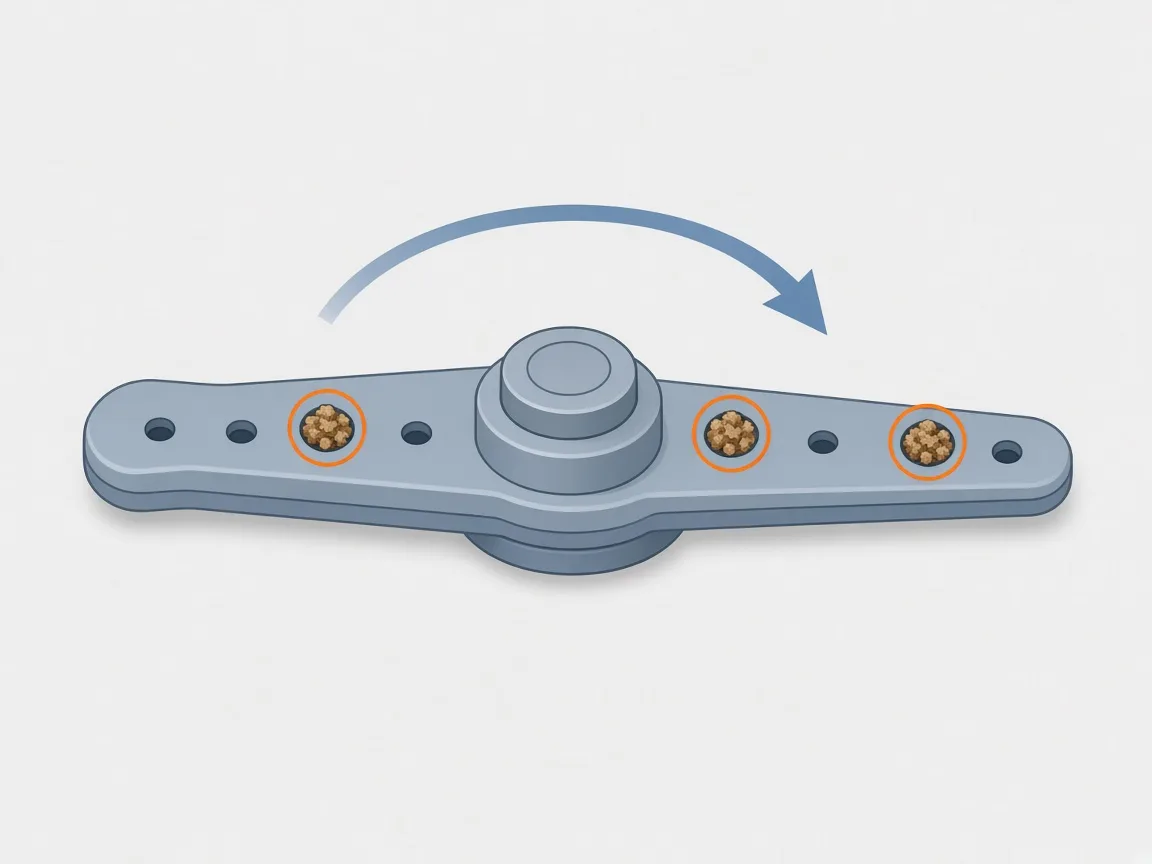
- Make sure the spray arms can turn. Before starting a cycle, spin the middle spray arm by hand. If something stops it, rearrange the dishes.
- Load correctly. Do not overload. Leave space so water and detergent can reach every surface. Angle items with the soiled side facing down and inward toward the spray arms. Do not stack items, and keep large pots and pans on the bottom rack from blocking the spray arm. Put plastics on the upper or third rack, never the lower rack.
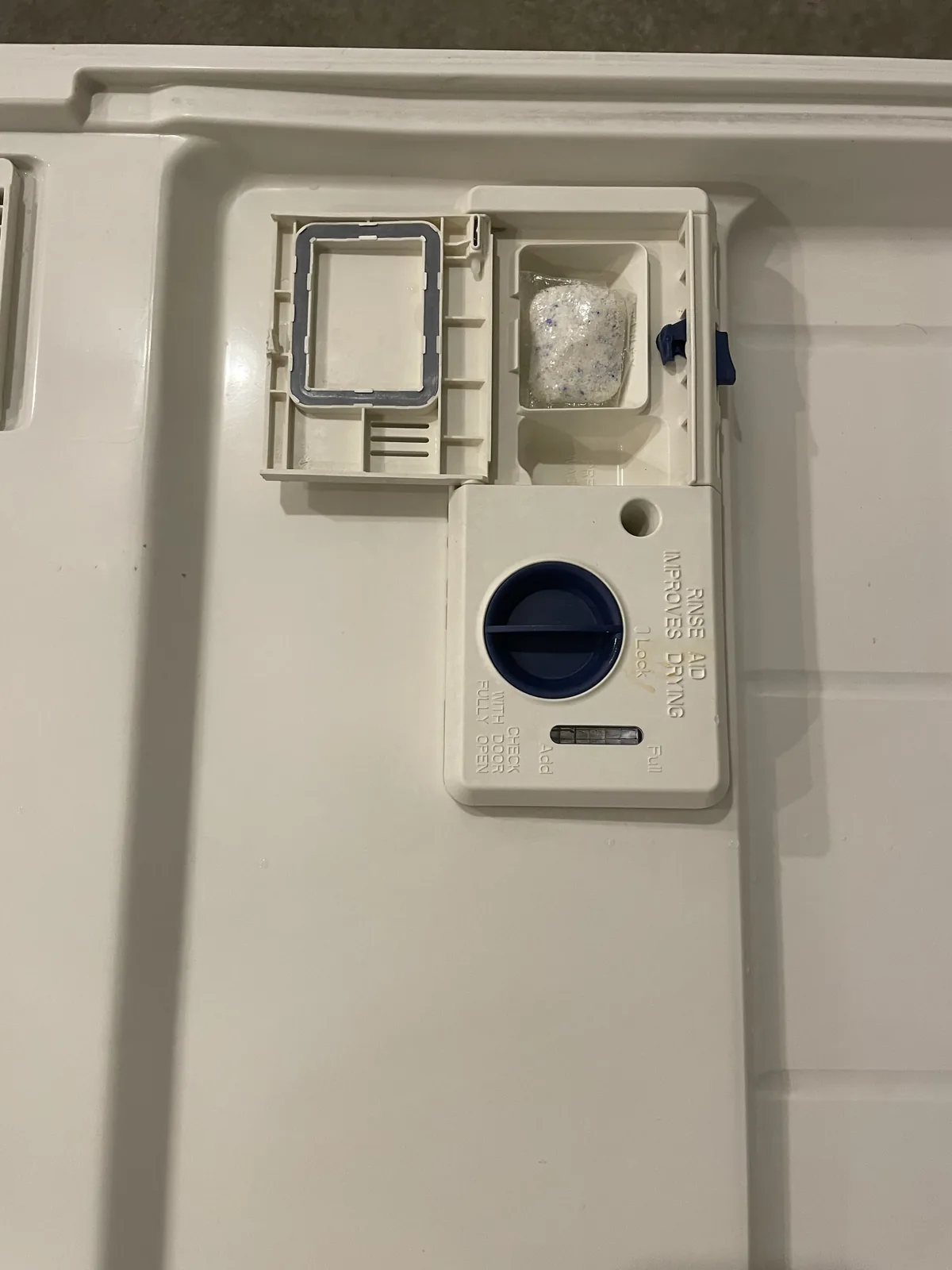
- Use the right detergent. Use automatic dishwasher detergent only, added just before you start a cycle. KitchenAid recommends high-quality pre-measured tablets or packs and says fresh detergent cleans better. Store it tightly closed in a cool, dry place.
- Add rinse aid. KitchenAid calls rinse aid very important for wash and drying performance and for controlling hard water buildup.
- Get hot water to the dishwasher. KitchenAid recommends incoming water of 120°F. Before you start a cycle, run the kitchen faucet for 30 to 60 seconds until the water is hot. You can measure it with a thermometer in a cup. If it is below 120°F, the water heater may be set too low.
- Check the water supply. The water supply valve must be fully open. KitchenAid says water pressure should be 20 to 120 psi. If an anti-flood or flood prevention device is installed on the supply line and set up incorrectly, it can block water from reaching the dishwasher.
- Pick the right cycle. For baked-on or heavy soil, use a heavier cycle or the High Temperature option if your model has it.
- Clean the dishwasher. For hard water film and residue, KitchenAid suggests a dishwasher cleaner such as affresh or a white vinegar rinse. Heavy buildup may need more than one treatment.
Still not cleaning?
If you have done every check above and dishes are still dirty, the problem may be inside the dishwasher. KitchenAid notes that a failed heating element or temperature sensor can keep the water from reaching the right temperature, and it recommends a qualified technician if the water stays too cold. Testing these parts involves electrical work. Stop here if you notice a burning smell, leaks, or a breaker that trips.
Need a pro? If any step feels unsafe or the problem keeps coming back, see when to call an appliance technician and how to prepare for the visit.
Possible replacement parts
A spray arm that is cracked, broken, or melted cannot spread water properly and may need replacing. Match any part to your exact model number before you buy.
Find the right part by your model number: check the lower spray arm on AppliancePartsPros and confirm it fits your exact model before you order. Not sure where the model number is? See How to Find Your Model Number.
Example: genuine Whirlpool lower spray arm, part number WPW10491331, was listed at $44.24 on AppliancePartsPros.com when we checked on November 20, 2026. AppliancePartsPros lists KitchenAid among the Whirlpool brands this family of parts serves, and notes that if this is the first time the lower spray arm is replaced, the wash arm support (part W11573369) must be replaced too. Prices change; check the retailer’s page for the current price and whether it fits your model.
If the filter itself is damaged, a replacement filter for your model may be needed:
Find the right part by your model number: check the dishwasher filter on AppliancePartsPros and confirm it fits your exact model before you order. Not sure where the model number is? See How to Find Your Model Number.
Related guides
- Dishwasher Not Draining: a general guide for all brands.
- How to Find Your Model Number: needed before ordering any part.
FAQ
Why is my KitchenAid dishwasher leaving food on the dishes?
The most common causes on KitchenAid’s support pages are a dirty filter, spray arms blocked by dishes, overloading, water that is not hot enough, and old or wrong detergent. Start with the filter and the hot water.
How often should I clean the KitchenAid dishwasher filter?
KitchenAid suggests about once a month, or every two weeks if you have a large family or run the dishwasher daily.
How hot should the water be for a KitchenAid dishwasher?
KitchenAid recommends incoming hot water of 120°F (49°C). Run the kitchen faucet for 30 to 60 seconds before starting a cycle.
Should I pre-rinse dishes?
KitchenAid says no. Its loading guide says modern dishwasher detergent is designed to work with food particles, so pre-rinsing can make the detergent less effective.
Why are my dishes covered in white film?
Usually hard water. KitchenAid recommends rinse aid, quality detergent tablets or packs, a dishwasher cleaner or white vinegar rinse, and a water softener if your water hardness is 15 grains per gallon or more.
Need a hand?
If the dishes are still dirty after these checks, a technician can test the heater, sensors, and wash system and replace the right part for your model.
Need a pro? If any step feels unsafe or the problem keeps coming back, see when to call an appliance technician and how to prepare for the visit.
Disclosure: some links in this article are affiliate links. If you buy a part or book a service through them, we may earn a commission at no extra cost to you. Learn more.
Sources
- KitchenAid Product Help, Dishes are not Clean: https://producthelp.kitchenaid.com/Dishwashers/Dishwasher/Wash_Performance/None_of_the_Dishes_are_Clean/Dishes_are_not_Clean
- KitchenAid Product Help, How to Clean the Dishwasher Filters: https://producthelp.kitchenaid.com/Dishwashers/Product_Info/Dishwasher_Cleaning_and_Care/How_to_Clean_the_Dishwasher_Filters
- KitchenAid Product Help, Spray Arm Not Working – Dishwasher: https://producthelp.kitchenaid.com/Dishwashers/Dishwasher/Operation/Spray_Arms_Not_Working/Spray_Arm_Not_Working_-_Dishwasher
- KitchenAid Product Help, Dishwasher Water Temperature Troubleshooting: https://producthelp.kitchenaid.com/Dishwashers/Product_Info/Dishwasher_Tips_and_Tricks/Dishwasher_Water_Temperature_Troubleshooting
- KitchenAid Product Help, Properly Loading a Dishwasher: https://producthelp.kitchenaid.com/Dishwashers/Product_Info/Dishwasher_Tips_and_Tricks/Properly_Loading_a_Dishwasher
- AppliancePartsPros, Whirlpool WPW10491331 Dishwasher Spray Arm (price checked November 20, 2026): https://www.appliancepartspros.com/whirlpool-lwr-strt-sa-wpw10491331-ap6022259.html